
A Gentle Answer in Harsh Times: conversation with Kateryna Kravchenko

Kateryna Ziabliuk
writer, musician
Disclamer: In this text, russia (as well as related terms like “russian invasion”, and others) is written in lowercase letters. This follows the September 2023 decision by Ukraine’s National Commission for State Language Standards, which ruled that such spelling in unofficial or non-formal texts does not violate Ukrainian language norms—reflecting the ongoing heroic struggle of the Ukrainian people against aggression, a public call by Deputy Prime Minister Iryna Vereshchuk, and endorsements from leading linguistic institutions of the National Academy of Sciences of Ukraine. Though this rule is not applicable in English, we keep the same lowercase convention in English as a deliberate symbolic gesture of respect and the broader context of Ukraine’s fight for sovereignty.
From her earliest childhood, Ukrainian vocalist and composer Kateryna Kravchenko burned with a fierce passion for jazz. She navigated the comically intricate, at times absurd rungs of post-Soviet musical education—first in Balta, then in Odesa—before stepping into Germany, a land that proved no less stubborn and resistant to mastery. Learning by doing — that is what she calls her life’s guiding tactic, and it turns out to be the most effective strategy precisely in times of turbulence, when distant relocations intertwined with isolation, and isolation, in a single breath, transformed into the martial state that engulfed Ukraine.
Perhaps the truest description of her artistry and of her essence is that old biblical proverb: “A gentle answer turns away wrath, but a harsh word stirs up anger.” Later she composed a suite inspired by Maria Prymachenko—the Ukrainian “storyteller” of colours—and founded the Kravchenko/Clees Duo together with Luxembourgish vibraphonist Arthur Clees. Together they weave sonic webs, delicate and translucent, from improvisation, from poetry, and from the voices of Vasyl Stus, Sarah Chauncey Woolsey, Hermann Hesse, Juan Ramón Jiménez, Robert Creeley, and many others. The themes that resound in these texts are raw and painful—solitude, exile, losses that nevertheless hold fragile crumbs of hope for rebirth — yet they are retold with such exceptional care, with such harmonious ambiguity, that one listens and feels: here no one wishes to wound with an extra word.
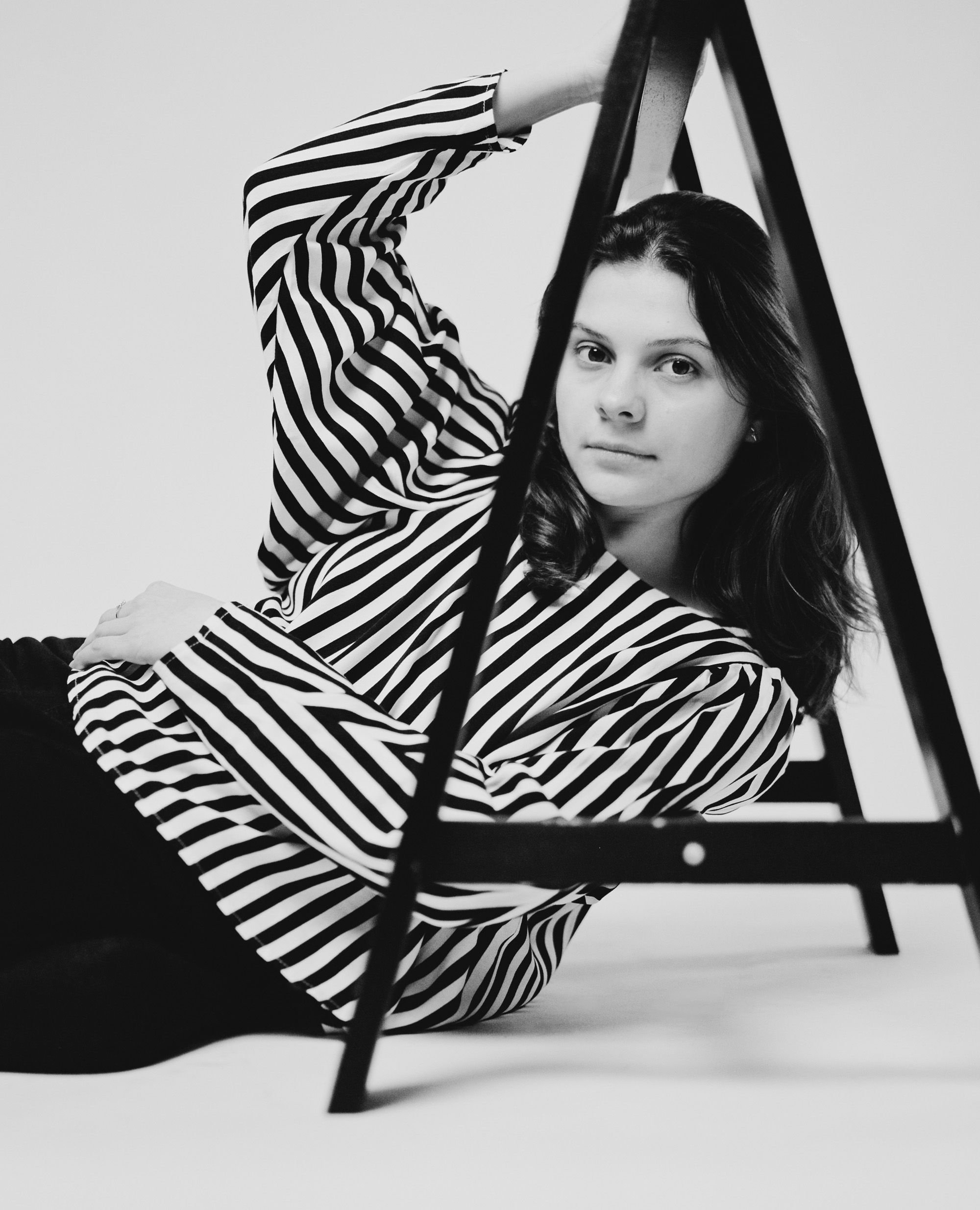
Kateryna Kravchenko, photo: Sebastian Lay
Let's start with the early days. What was important to you in your childhood? I remember you from the time when you played with the pianist Oleksii Petukhov — competitions, concerts... How did you feel about it?
Perhaps I'll start a little earlier to explain how I got to this point. I was born in a small town where there was essentially nothing — only a music school. They taught academic vocals and classical piano there. No one had even heard of jazz.
Then a new teacher arrived. He had studied choral conducting, but lived in a dormitory with ‘pop singers,’ as they were called back then. So he picked up some jazz terminology from them. It was still Soviet jazz: Melodies of Jazz by Volodymyr Symonenko [Ukrainian jazz pianist and musicologist — ed.] — that is, a kind of ‘bible’ of the first jazz books. But it was he who opened up the world of jazz to me. YouTube had just appeared, and he showed me some recordings that simply blew me away. Before that, I only had radio and television — and suddenly a whole new world opened up. That's how I first saw Ella Fitzgerald. I was 12 or 13. And it was a real discovery: ‘How can something like this exist in this world?’ I fell in love with this music so much that I only listened to jazz. I wanted to sing only jazz, like Ella, and know all her solos. A real “jazz polizei”! At that time, I didn't understand anything about improvisation, I only knew: ‘I want to sing like Ella.’ But I didn't understand how to learn it.
So the teacher showed you how it could sound, but there was nowhere to learn it?
Exactly! He explained everything ‘by feel’: he said it needed to ‘swing’ a little, but he couldn't explain how. He told me what someone had once told him, something he had heard somewhere... So we tried to do something together to make it sound at least roughly like the recording. At the time, I was completely fixated on making everything sound exactly ‘like the original.’ I didn't have a speaker or any software to slow down the recordings, so I leaned against my laptop and listened, pausing after each phrase. That's how I studied before I moved to Odesa.
Then I started taking lessons with a teacher and sang in an ensemble, a vocal quartet with three other girls. It was very interesting. And then I realised: that's it, I want to be a jazz musician, learn to improvise, have my own band and perform on stage! That's when the competitions began.
My first one was the Rostyslav Kobanchenko Memorial Competition at the Odesa Music College. I sang ‘Air Mail Special’ and ‘Mr. Paganini.’ I was 13 years old. After that, I was invited to perform with the Mykola Goloshchapov Big Band — my first performance with live musicians. Before that, I had only sung with playbacks — no one at school knew how to accompany me. And here, at the Odesa Philharmonic, I performed two songs, including Diana Schuur's ‘Every Day I Have the Blues.’ At the time, I didn't understand how to sing it at all, but I wanted it so much that my desire overcame all the technical difficulties. It was my first experience of doing my own interpretation — because I didn't like Diane Schuur's version, because it wasn't ‘like Ella's’ (laughs).
How did you analyse the songs back then? Did you study the melody, the lyrics, translate them?
I just listened to them over and over again. Then I tried to repeat everything in great detail. But my English was poor at the time, so I first learned the song by ear. Then I opened the lyrics and found that half of them didn't match. But I still trusted the recording more than the written text.
Because of this, my pronunciation was funny: once, a Canadian English teacher said that it was ‘not appropriate’ for me, a European girl, to sing like that, because there was African-American slang everywhere — it was as if I had suddenly started speaking in the Transcarpathian dialect instead of literary Ukrainian (laughs).
At the time, I didn't understand what I was singing about. The teacher couldn't help either. I translated the words so that I could at least understand the meaning, but I still sang a mix of what I heard and what seemed to be written. I'm still a little embarrassed about that preparation.
I think we all went through that. In the post-Soviet space, English was difficult to learn. And in Germany, surely not everyone knew it perfectly either?
Yes, it would be interesting to find out from the Germans themselves, but I think I idealised them — it seemed that everyone there spoke English well. Although, I'm sure there are difficulties too. I was on the jury of a children's competition this summer — Jugend Musiziert. It's a very famous German competition. And I realised that everything has changed now: the internet, YouTube — children have so many more opportunities.
Back when I was studying, there was nothing: only YouTube, where you could find three-minute clips of lectures from Berklee [College of Music in Boston — ed.], and you would watch the video a hundred times, trying to understand the ‘hidden meaning’. It's funny now, but back then — just 10-15 years ago — it was the only way to learn.
Yes, we all remember those times. So, did these competitions really become an important stage for you?
Surely. Especially that first performance with the big band — it was a real ‘wow’ moment. Then there was the competition in Skadovsk. We went there every year with the girls. I performed as a soloist, and it was a very warm experience for me. Skadovsk was a small but very jazzy town — I wanted to go back there.
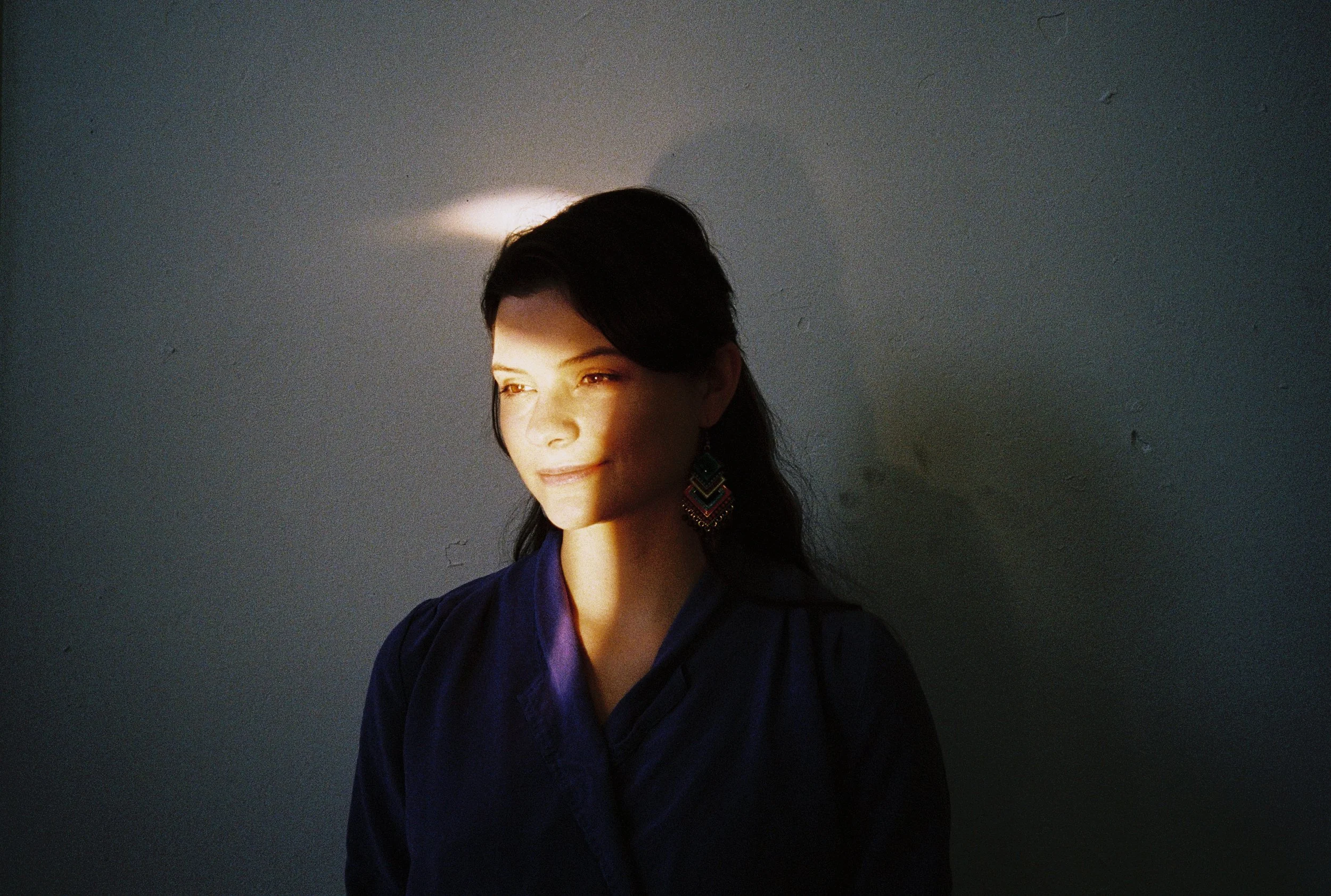
Фото: Erik Mathias
So you decided to enroll in college. How did that happen?
Yes. At that time, I already knew that I wanted to become a singer, a musician, and learn to improvise. There weren't many options. The most realistic one was to enrol in the Odessa Music College, because I lived in the region and my mother wouldn't let me go any further. So it was either Odesa or nowhere. I enrolled, and I remember those years like this: the best thing about the college was my collaboration with Oleksii Petukhov. Because what was happening in the pop vocal department was really tough. I don't have many good memories of that. But working with Petukhov was different. He opened up new horizons for me, and I started playing the piano more. I had studied classical piano at school, but at college I began to take accompaniment more seriously and even write improvisations. You probably went through the same thing.
Of course.
It seemed to be the only way to learn to improvise, because our improvisation lessons were conducted like: ‘Girls, listen to the music and do something.’ The teacher believed that you just had to ‘feel’ it.
And we wrote improvisations by hand, memorised them, without even understanding how a phrase or harmony was formed.
But with Petukhov, everything was different. He was incredible. Even now, he seems like someone from another world to me. I can't imagine how he learned everything he knew. He also had a Soviet education, tape recorders, reels, and transcriptions by ear. He taught me the basics: what a square, a digit, a grid is, how to make a simple accompaniment, the first ‘voicings.’ It was a valuable foundation for understanding music.
And, I suppose, that's when the new competitions and performances began?
Yes, it was during those years. But there is another story that I have never told because I wanted to forget it for a long time. In my first year at college, I took part in The Voice. Kids.
It was a very traumatic experience because after participating in the show, I was literally bullied at college. The vocal teachers humiliated and mocked me, saying, ‘Why did you go there? Why did you do something so frivolous?’ I was only 13 or 14 at the time, and I wasn't even studying at the school yet. I was just a kid from a small town, and The Voice. Kids seemed like something almost magical — like the American dream: everyone would know me and my life would change.
I sang ‘Air Mail Special’ with Ella Fitzgerald's scat. And it's interesting that many people still recognise me because of that performance. Even one of my friends from the conservatory said that she saw me on ‘The Voice’ when she was a child, and that was the moment she discovered jazz.
So maybe someone, like me once, discovered this world for the first time because of that.
Even though the experience was painful, it had positive consequences?
You know, although at the time, it was viewed negatively at the school. They said, ‘Why? It's commercial, it's not serious.’ They said you immediately fall into a different category.
But for me, it was a childhood dream come true. And now I can finally talk about it calmly, without shame.
Before, I wanted to erase all of this from my biography. In addition, there was a family history: my mother really wanted me to participate, but I didn't really want to — so there was also an internal conflict. And on top of that, there were the narratives of the Soviet education system, which told you: ‘You're not ready yet, you need to polish your voice for another ten years before you can even go on stage; and don't sing, just stand there!’ (laughs).
But you managed to get out of it.
And it was Petukhov who helped me with that. He told me something very important at the time: that I should consider studying abroad. It seemed fantastic to me — because I knew that studying abroad was expensive, although I dreamed, of course, of Berklee College Of Music. When I heard that it cost $60,000 a year, my desire quickly faded.
So, how did studying abroad work out then?
Viktoria Leleka helped me a lot with my orientation. I met her when she was already studying in Dresden, Germany.
Victoria was touring Ukraine with her band Leleka at the time, and I happened to catch their concert at the Peron 7 club in Odesa. After the show, we got talking, and she said, "If you're interested, come visit us. There's a great teacher, I'll help you." And she really did help — she told me where to submit my documents and how the entrance exams work.
For me, that was the deciding factor. She became a kind of guide. Because, unfortunately, other musicians who promised to help just disappeared. But Viktoria really did everything she promised.
So I started learning German. One of the main factors was that education in Germany is free, and I had only been there once.
Did you have any doubts that it was realistic?
No, all my decisions at that time were based solely on emotions. I was like this back then: if someone said it was good there, then I was going there.
I studied the language, prepared for admission, and submitted documents to four German conservatories at once.
And I was accepted in Dresden. That was in 2018. When I arrived, I had huge expectations — I thought the level would be much higher, the training exciting, intense, creative. But in reality, my expectations were too high.
In Ukraine, despite all the difficulties, I felt that my teachers lived for music. Petukhov and some other musicians — they are inspired, they love what they do. But in Dresden, I found that many teachers work formally.
Some had been appointed to their positions back in the days of the GDR and had stopped developing. Sometimes, very basic things that I already knew from Odesa were discussed in class, which surprised me.
But surely there were some positive aspects?
Definitely. They have fantastic facilities. Every classroom has a grand piano, and all the equipment is in excellent condition. You can plug in a microphone, the sound works, everything works. For me, after our ‘realities’, it was just incredible. It created the feeling that you were in a professional environment, even if not everything was perfect in terms of teaching.
My vocal teacher, Celine Rudolph, was the one who supported me.
She was the first to say, ‘Kateryna, you need to start your own band, write music, perform.’ And that surprised me, because after Odesa I was convinced that ‘you're not ready yet,’ ten years of honing your skills and so on. But here it was the opposite: ‘Try it, do it.’
“I [..] always believed that such things should inspire listeners to be just as enthusiastic about their own folk music, so that it would be heard and enjoyed by people from all over the world — without comparison to anything else”
And you started your own band?
Yes. At first, I didn't even know where to start. We didn't have any experience in Ukraine in choosing musicians for a band. It was simple: if you play the piano, you play the piano.
But in Germany, for the first time, I felt that I could choose who I wanted to play with, who was interested in this kind of music.
That's how my first band came about — thanks to Celine’s support.
We prepared a few initial arrangements, and I even had one of my own compositions. And this band immediately won the conservatory's ensemble competition. After three months of training!
It was a big sign for me: ‘Yes, I have to keep writing.’
At the same time, I joined the German National Jazz Orchestra — BundesJazzOrchester, or BuJazzO for short.
It is a very prestigious ensemble that accepts young musicians under the age of 24 for only two years. They tour all over the world — the United States, China, India, even Ukraine was on their itinerary.
I applied as a vocalist and was accepted. I was supposed to go on tour with them to China...
That moment when the pandemic started.
Oh… It was the beginning of 2020, we had collected our passports for visas — and everything closed.
The conservatory too — classes stopped, concerts were cancelled, and I felt like I was just wasting my time.
It was a depressing period: there was no one to play with, it was even difficult to rent a room for lessons.
The first two years were very difficult for me.
After the pandemic, things gradually started to improve?
Yes, but slowly. We managed to play a few concerts in Dresden and performed at several festivals. We took third place in the Blue Note Competition in Poznań. Our line-up was international: the pianist was Polish, the drummer was Brazilian, and the bassist was German. It was an incredible experience: different mentalities, different musical thinking — I learned a lot.
After that, the band broke up, but I have no regrets. Then Short Collection of Tales appeared. We played without lyrics, I only had a melodic line.
The name was abbreviated as SCOT band — I hated it, but that's how the wordplay turned out.
And my first album was called Stories. It was also symbolic — like stories I told through music.
The name came about simply because I wanted to somehow summarise everything that was inside me at that moment: emotions, memories, experiences.
Each track was like a reflection of some inner moments — not always happy, but honest.
Were you already thinking of Stories as a complete project?
No, at first I didn't understand what an album was at all. I was used to listening to music on YouTube in separate videos, you know, those hour-long videos with music and the same cover art. I didn't have any CDs or vinyl records at home because my family wasn't into that culture. So the idea of an album as something coherent came to me while I was working on it. It was a case of ‘learning by doing’.
I realised that it's not just about music — you have to think about the visual image, the concept, the structure, the order of the tracks.
At the time, I thought: just take a photo, release it, and that's it. But it turned out that you also need promotion, communication, presentations. At the time, I still thought that if you're talented, you'll be discovered.
That classic belief that one day a producer will knock on your door and say, ‘Kateryna, get ready, we're going on tour.’
That's right, I was sure of it! But after the album was released, especially during COVID-19, I realised that it was all an illusion. The world is big, and in order to be heard, you have to create your own identity, your own direction. Then there was a slight crisis: I rethought a lot — who I am, what I do, why. Until then, everything had come naturally — competitions, successes, events. And then suddenly I had to create meaning myself — they didn't teach that at the conservatory.
This crisis somehow smoothly transitioned into a period of full-scale invasion. My mother came to see my concert and stayed because the war had started. I didn't immediately understand what was happening because everything that had happened before no longer mattered. I had to rethink myself, my identity, my language.
That must have been difficult — especially since there are still quite a few russians living in Dresden?
Terribly. There were quite a few people from russia in my circle — students, musicians.
There weren't many Ukrainians there, and it was very easy to perpetuate the myth that ‘we are all the same, and the Germans see us as one.’ We had a common social circle: it seemed that there were no problems, that art was outside of politics. But after 24th of February, everything fell into place.
One of my close friends, a very talented singer, simply returned to russia and started performing concerts during the war. The same thing happened to many of my musician friends. Some initially supported Ukraine, even participating in charity concerts, and then — silence.
Some simply unsubscribed or stopped communicating.
But at the same time, such moments crystallise identity.
Exactly. That's when I first clearly realised who I was. I began to think about my culture, about Ukrainian music.
And it turned out that I knew very little about it. I always liked the Ukrainian language, I loved Ukrainian literature, but in educational institutions it was treated formally — you had to sing one song in Ukrainian at the state exam, and that was it. No one talked about Ukrainian identity, because even the locals had fond memories of the Soviet Union and the myth of ‘brotherly peoples’ and high Russian culture.
I learned more about Ukrainian music from Viktoria Leleka. Even then, she was performing Ukrainian repertoire and writing her own songs. After the Maidan, it became obvious to her that Ukrainian culture is complete and powerful in itself. I didn't really understand that at the time, I was a teenager. Although I couldn't write lyrics in Russian — they didn't sound right. However, the first song I ever wrote, ‘Tam, de ty’ (‘Where You Are’), was written in Ukrainian. That was before I moved to Germany to study. I performed it at my entrance exam.
“...every time I felt that a person did not fully understand me and needed guidance, I would give them Zabuzhko’s book “The Longest Journey”
How did your discovery of Ukrainian music continue?
I started by listening to recordings from the Polyphony project, which collects folk songs.
And then I took part in a project with Mariana Golovchenko, who brought folk songs and showed me how to sing them. I was really hooked. I still perform some of them.
Now I have a duet with a French bassist — we only play Ukrainian songs.
And when we perform with this in Germany, the Ukrainian language is heard in the jazz club — and it's wonderful.
The audience was delighted. After the concert, people come up and say they didn't know how beautiful our music is.
You approached the person of Maria Prymachenko in one of your projects, it is the suite. How did it come about?
It all started in Sweden. It was late 2022 – early 2023. I was studying there on the Erasmus+ programme and had the opportunity to create my own project for the New Sound Made festival in Stockholm.
My long-standing dream was to write a composition for a large ensemble, not just vocals and a trio, but a real ensemble. So, I had the opportunity to do that, even though I didn't know what the music would be about yet.
During the Christmas holidays, I came home and came across the news about the Maria Prymachenko Museum, which was destroyed at the beginning of the full-scale invasion. I was deeply shocked. It seemed that something very bright and majestic had been destroyed — I just sat and cried because I imagined how the paintings were being destroyed. But then I came home for the holidays and found out that her fellow villagers had saved her works, hiding them in their homes under shelling, risking their lives. I was struck by the symbolism: once her fellow villagers did not understand her, even shunned her a little, and now their descendants are saving her legacy.
There is such power in this — humanity, dignity, because the world around is falling apart, and perhaps it is worth thinking about how to preserve your capital or something... But you are saving art.
So I decided to create a project dedicated to Maria Prymachenko, her paintings and this story.
And it described more than just her work; it was meant to convey the idea that culture is not something separate from life. It is important for preserving the identity we are fighting for.
The first version of the suite was performed in Stockholm, at the festival. At that time, the ensemble was large — much larger than in the version we later played and recorded. The reaction was extraordinary — people cried and thanked us after the concert. I felt that this was really something important.
Then we performed this programme in Ukraine — at the Odesa Philharmonic in the autumn of 2023. During the first piece, an air raid siren sounded. We went down to the basement of the philharmonic, where there was an old grand piano. The musicians started jamming and continued the concert right there in the shelter.
It was the most powerful experience of my life. It was a true act of resistance, showing that no matter how difficult things are, life goes on. When I came back upstairs, I realised that this is the meaning of our profession — to be there for people, even in the dark.
That's a very powerful story. And then there was a concert in Dresden, right?
Yes. The third performance of the suite took place in Dresden in 2024.
We held a charity concert. We thought long and hard about where to direct the funds.
In Germany, you can't openly collect money for military needs, so we decided to support the Save Ukraine organisation, which is working to return deported children from Russia. It's difficult, titanic work: finding the child, finding the parents, organising a route through several countries. We wanted more people to know about it.
The concert turned out to be special — sincere and profound. We raised over 4,000 euros. The organiser was so moved that he paid for the hall rental and sound equipment out of his own pocket so that the entire amount raised could go to the cause.
It seems that this project meant much more to you than just music.
Yes, very much so.
It was not only about Maria Prymachenko, but about all of us. It was about why we save culture even when the world is falling apart. It was about how culture is part of who we are. For me, it was also a moment of reconciliation with myself: after many years of searching for who I am in the world, the suite became the answer — I am a Ukrainian musician, and this is my story.
How did you feel during this time? In the early years of the war, it must have been difficult to find meaning in creativity.
Very difficult. At the beginning of the full-scale invasion, I asked myself: "What is the point of all this music? Who needs it now?". People are on the front lines, and you're sitting in a warm room, learning jazz standards — it seems pointless. But then I realised that this is my role and my privilege. We musicians can support others. And when you go on stage, even in a bomb shelter, it's a form of resistance. Sometimes it's our music that gives people the strength to live, that breathes for them.
You already mentioned Arthur Clees, he was accompanying you musically for some time so far. How did your collaboration begin?
We met in 2021, before the full-scale invasion, when I was living in Dresden. Arthur is from Luxembourg, and at that time he was very interested in Shostakovich, classical music, and perhaps even the russian school to some extent. This is also connected with his distant roots, which reach back to those regions. But we became friends — I think I ‘Ukrainised’ him a little, and I'm proud of that (laughs). I started giving him books by Oksana Zabuzhko to read, showed him Ukrainian music, and told him about our past. And gradually he became deeply interested in Ukraine and our folklore.
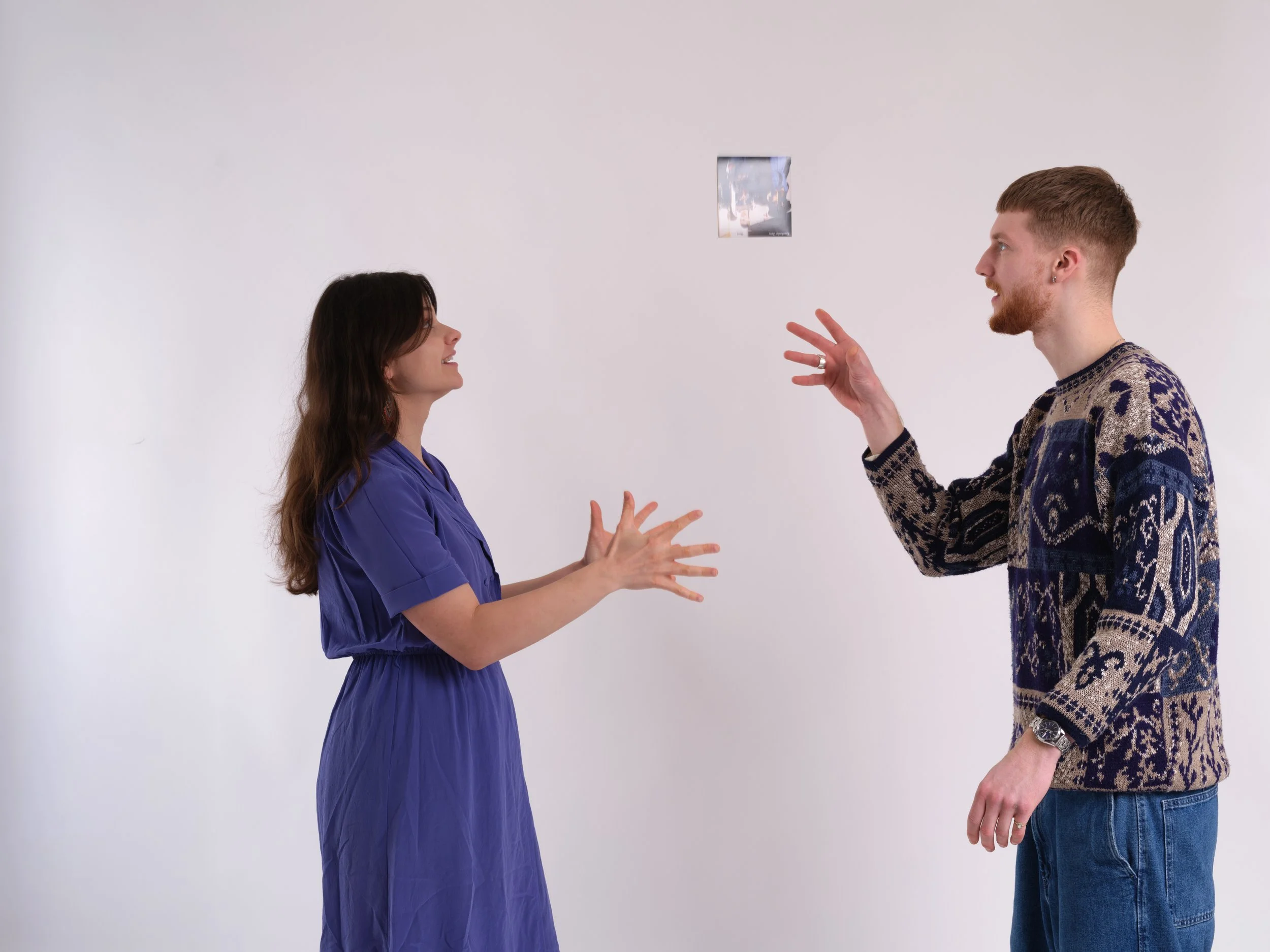
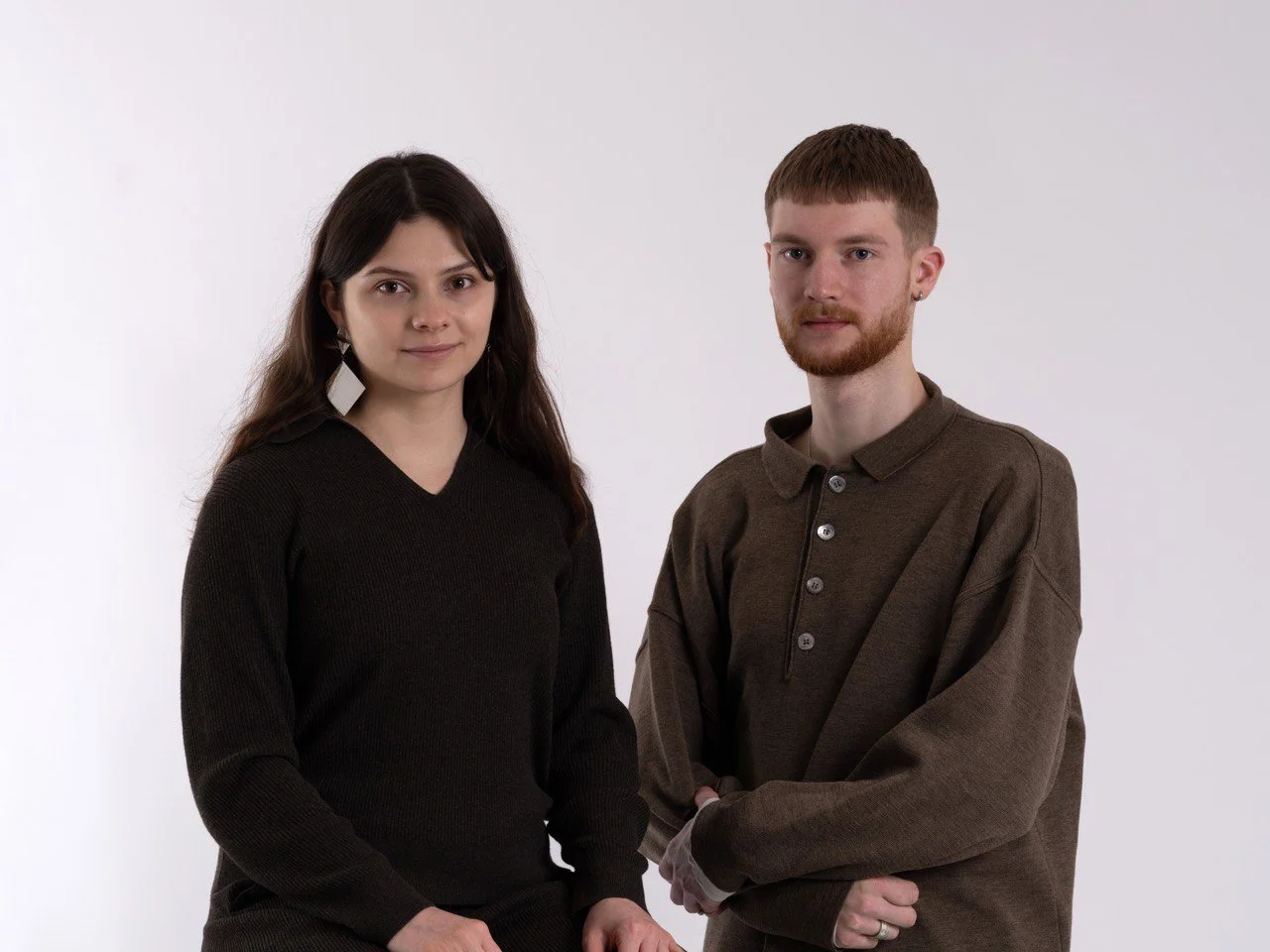
Over time, this became my style of communication; every time I felt that a person did not fully understand me and needed guidance, I would give them Zabuzhko's book The Longest Journey.
Artur and I discussed music and values a lot. For example, in composition classes, we were made to listen to Shostakovich or Stravinsky, and I felt physically uncomfortable. I couldn't abstract myself and perceive it simply as music — without the context of war, empire, everything behind it. They asked, ‘What's the matter, what happened?’ I just asked in response, ‘Don't you understand what's going on right now?’ Arthur saw my reaction and was also concerned about why this was the case — and it became an important conversation for us.
He became genuinely interested in Ukrainian music, and my circle of friends gradually began to change. It began to become more Ukrainian, because everyone was interested in it. Arthur and I discovered folk melodies, lyrics and stories together. He became part of this journey, not only as a colleague, but as a participant.
After our concerts, people showered us with compliments, saying, ‘It's so rich, we'd like to have something like that too.’ I, on the other hand, always believed that such things should inspire listeners to be just as enthusiastic about their own German folk music, so that it would be heard and enjoyed by people from all over the world — without comparison to anything else. That would be great, wouldn't it?
Of course. It's a very desirable idea, despite the fact that people are used to comparing things to what they already know. For example, I recently had a rehearsal in a rather extravagant place — a three-storey old house in The Hague, owned by a noble lady from an old French Huguenot family, and the house has been there since her great-grandfather's time. It is a completely different reality in which some patrons of culture from former empires live — for them, it is a pleasure to receive such ‘cultural’ guests. We were playing a lot of Hutsul folk music, and the hostess said to us: ‘Oh, your Ukrainian music is so beautiful — you have such magical Islamic chants!’. But it's just the Hutsul mode.
Oh, that's interesting! We really have a lot of that, so many people from the east and south have migrated here, it's impossible to assess it linearly. I have often thought of my native region as a former city of the Crimean Khanate of the Ottoman Empire. My city, Balta, was a Turkish service [at the end of the 17th century, there is mention of a fortress that was built to control the border territories by the Ottoman army, while at the same time the population of Balta was international, with people from all over the russian and Ottoman Empires and the Polish-Lithuanian Commonwealth were living there — ed.]. Be that as it may, this is reflected in later history.
When I was studying in Sweden, I really wanted to learn the so-called Nordic Folksongs. The academy had a folk music department, so I signed up for it. I met the teacher, and she said, "Oh, you're from Ukraine? Did you know that there is a Swedish village in the Kherson region? It's called Gammalsvenskby, or Staroshvedske in Ukrainian [now part of the village of Zmiivka in the Kherson region — ed.]. They have such songs there! They are very different in melody from Swedish songs, although they are sung in Swedish”. We studied it, and it really is quite exotic.
Let's get back to your projects. One of your most active projects is the Kravchenko/Clees Duo. How did it all start?
— We started playing as a duo in 2023. At first, we had a concert planned as a duo and only a few weeks to prepare the programme — that was the initial impetus. Then we constantly refined it, changed it, and added to it. The duo is very organic: a combination of vibraphone and voice, concise but with plenty of room for improvisation. Sometimes we bring in other musicians — for example, a bass clarinetist, or as in the project with Mariana Golovchenko, or visual artists.
Before that, Arthur helped me work on the suite — he helped rearrange the pieces and played during rehearsals. You can hear him on the recording.
Our duo is already a complete project, but it's very flexible. We can do absolutely anything we want with it.
And, in fact, the new album also grew out of this duo, right?
Yes, it's our logical continuation! We recorded it under the production of Wanja Slavin, a saxophonist and producer from Berlin. He has worked with many strong artists, including Lucia Cadotsch and Mirna Bogdanović. Her latest album, which Wanja produced, even won the German Jazz Prize.
Working with him was extremely interesting. Thanks to Wanja, our sound became different — more complex, more voluminous. We used unexpected instruments, such as a church organ. When you listen to it on the recording, it sounds like electronic music — but it's a real organ, with live air, registers, and vibration. Its sound added depth, as if it created a new universe within the music. As the Germans say, we hid a lot of eggs, or surprises, in this album. (laughs)
How would you describe the atmosphere of this album?
It's very personal. The songs feature Ukrainian, German, American and Spanish poetry. There's a song called ‘Bury Me Living’ — you heard it at the concert, but the album version is completely new: with different harmonies, timbres and instruments.
Vanya helped us find the balance between jazz, electronica and atmospheric intimacy that we were striving for.
The single is scheduled for release on 10 March, and the full album will be out on 10 April. We are currently preparing a photo shoot for the press and putting the finishing touches to the design. It's a very exciting moment — I've been ‘carrying’ this album for two years. Now I can't wait for it to finally see the light of a day.