
LA MALSONANTE: The Weight a Song Can Carry

Kateryna Ziabliuk
There are sounds that belong easily, and sounds that are taught to understand themselves as wrong: too local, too unruly, too popular; unwelcome in the conservatory, until one day they become desirable to the market. LA MALSONANTE’s work exists somewhere inside this contradiction. Even her name carries it: mal-sonante, something discordant or improper to the ear. But improper to whom?
The Bogotá-based composer, producer and researcher grew up between different musical worlds: the Central European tradition of the conservatory and the popular and traditional musics she encountered at home, at school and later through Colombia’s Pacific region. After graduating, this division became an ethical crisis. Her classical education had given her the tools to make music, but not an answer to a more difficult question: what could that music mean within a society profoundly marked by armed conflict, inequality and displacement?
Following that question means entering histories that extend far beyond music. In our conversation, LA MALSONANTE moves between the conservatory and the marimba de chonta, Bogotá and the Pacific, Indigenous women’s resistance and the uneasy appropriation of traditional culture; between La Violencia, guerrillas, paramilitaries, narcotrafficking and the forms of territorial violence that persist in Colombia today. Music appears throughout not simply as an aesthetic object, but as memory, identity, commodity, refuge and, in certain places, an act of resistance with very real consequences.
Listening to her, I kept thinking about why it matters to know histories that are not our own. Coming from Ukraine, at a time when war has again become part of the lived reality of Europe, I recognise something in the burden she describes - not because Colombia and Ukraine share the same history, but because grief can create unexpected points of recognition. There is a particular weight carried by societies that have learned to live alongside violence: the fear passed between generations, the instinct to remain silent, the struggle over whose culture is allowed to survive, and the uneasy task of continuing after what has happened.
Perhaps sharing these histories is one way of refusing the isolation that violence produces. To understand another country’s grief does not diminish the specificity of our own; it can enlarge our sense of what it means to carry it. LA MALSONANTE’s work asks a related question through sound: how do we inherit difficult histories without turning them into spectacle, and how might art become not an escape from that burden, but a way of holding it together?
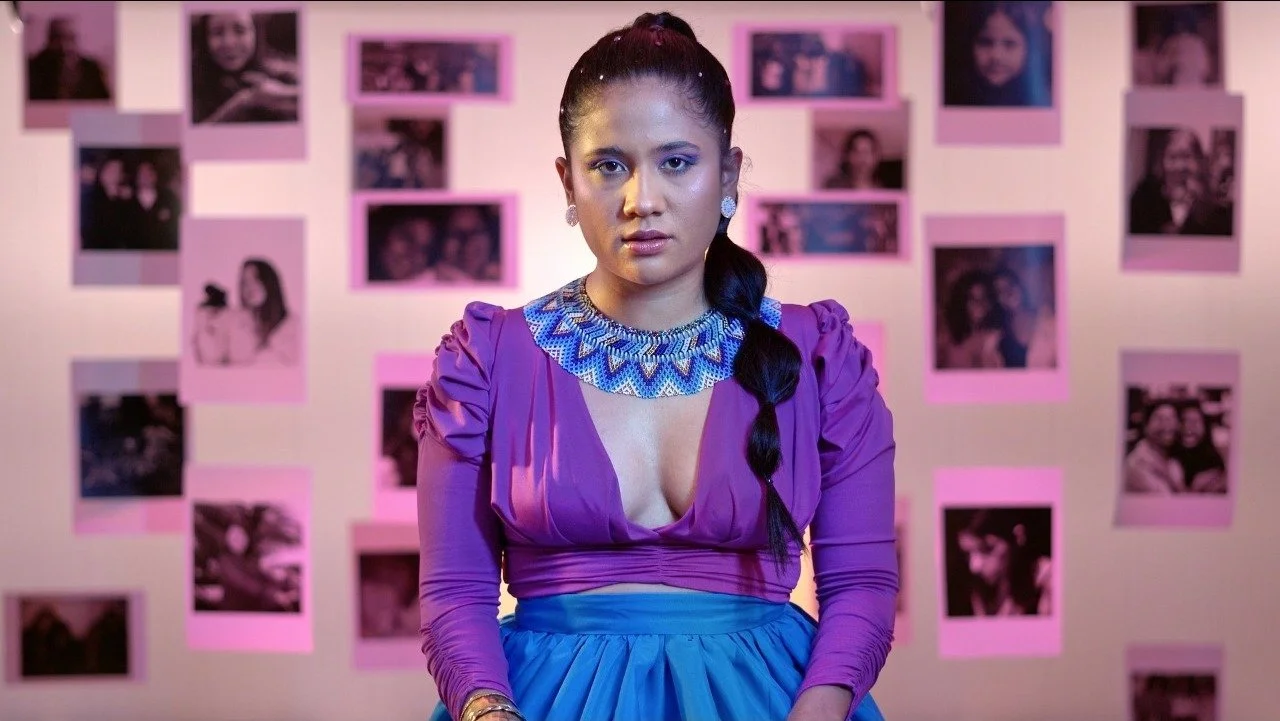
LA MALSONANTE, photo by Celia Hurtado
Roots, Ruptures, and Resilience
Let’s start with your beginnings. I’d like to go deeper into what that first encounter with sound was like, your time in the academy, and how that environment shaped your artistic vision until you arrived at what you do today.
My path began when I was very young, at a conservatory here in Bogotá [a part of the Faculty of Arts at the National University of Colombia - ed.]. It was a very particular environment, where everything revolved around the Central European musical tradition. At the same time, my education was dual: while I was immersed in the academic world at the conservatory, at school I inhabited alternative spaces, singing and exploring popular music.
As the years went by, that academic rigidity began to create a profound sense of discomfort. The conservatory became a difficult space for me, but I decided to persevere until I entered university to study composition. Although I came from a classical piano background, studying composition opened doors in my mind. I had very open-minded professors who encouraged exploration and the use of other sonorities; things that had previously been unthinkable, or simply unwelcome, during the basic piano programme, such as engaging more frequently with local musical traditions.
But the real breaking point came when I graduated. I entered a profound crisis, a depression triggered by a sense of ethical disconnection. I felt that the music I was making was not contributing socially to the context in which I lived. In academia, the role of the musician often involves isolation: improving your technique, becoming a “better” musician, but always at a distance from social reality. My own reality was marked by the Colombian armed conflict. My father was a victim of it, and I grew up witnessing situations of extreme vulnerability around me. The conflict remains alive in many forms, and I felt that the music I had learned to make was incapable of entering into dialogue with that reality. That feeling of helplessness became the catalyst for creating my current project, LA MALSONANTE.
It is a very different form of resistance, much more territorial and direct. How does this project bring together all the threads: your academic training, traditional heritage, and this profound social consciousness?
I felt an urgent need for my music not to remain a closed dialogue between musicians, but to become a mirror of who we are as a society. The name of the project is itself a declaration of principles: it comes from that which “sounds bad” to the ears of academia, or to a profoundly conservative society, but which, at the end of the day, is part of our sonic reality.
In my music, I work with alternative, experimental techniques, as well as influences from Colombian traditional musics, including those of the Pacific region. But I am not trying to create a copy or folkloric imitation. My intention is to bring these sounds together through my own experience as a citizen of Bogotá who recognises and embraces those roots. It is my way of practising activism through sound; a way of saying that these stories, these territories, and these sounds matter, and that they have a place in the present.
Do you have a defined style in composition?
I don’t know whether I have a predetermined or completely defined style. There are, however, certain explorations that run through my work, such as intervallic exploration in both melody and harmony. Even so, these decisions are never arbitrary. I almost always begin with a narrative concept, and from there I define the genres, influences, and harmonies that best enter into dialogue with the rhetoric of that concept. Once those foundations are established, I begin adding elements, reharmonising, playing with sonorities, and transforming the initial melodies through intervallic changes that help me avoid predictability. To a large extent, that is my compositional process.
You have just published your latest work, the EP called Nativa, which is based on the Colombian womanhood and the social resilience. Tell me about the women you were thinking about while creating and about each part of the work.
Right, Nativa addresses the struggles and forms of resistance of Indigenous women within the context of Colombia’s armed conflict. Across its different chapters, the work narrates the forms of violence these women have experienced, but also the multiple forms of resistance they have built in the midst of the conflict and throughout the country’s history.
It is important to clarify that there are currently approximately 115 Indigenous peoples in Colombia. Many of them have suffered the territorial consequences of the armed conflict and have faced different forms of symbolic and structural violence throughout history. During the research process, I came to understand that, because they are women, they have experienced the conflict in a differentiated way. That is why I am interested in centring this work on those experiences and on the particular ways in which they have resisted; even today, while Indigenous women continue to experience different forms of symbolic violence, there is still a lack of recognition of the States structure and so on.
Nativa narrates some of these stories chapter by chapter. The introduction, Comunidad, addresses the concept of community feminism proposed by Indigenous women from the south of Latin America. Then, El Encuentro revisits some of the words and discourses that have historically been directed towards Indigenous women, both during the colonial period and in the context of the armed conflict, by colonisers and armed actors.
El Mendigante Gris speaks about the different problems women face when they are displaced from their territories and arrive in the city. Resisten focuses on the acts of resistance that, according to the National Indigenous Organization of Colombia, Indigenous women have undertaken. These women have been fundamental agents in their own defence and in protecting the wellbeing of their communities in the face of conflict.
Mujeres en Resistencia is a collaboration with the Nasa Indigenous women’s group Memnxi Kiwe, from Cauca. The song highlights the important roles Indigenous women have assumed and their contribution to the construction of the Colombian nation. Finally, the outro, Confesión, is a monologue that brings together the dilemmas, questions, and tensions I experienced during the process of creating this record. The work was co-produced by Antonio Guevara, Memnxi Kiwe, and myself.
Have you been involved in other creative processes where the central theme was women, femininity, or resistance?
Yes, I have developed several previous projects. One of them emerged through a grant from the District Institute of the Arts, which brought together women composers, producers, and performers to create a collective song during the pandemic. That process resulted in an unreleased song called Despertar, in which each participant shared her experience of machismo and the moment when she decided to confront it. As the principal composer of the work, I brought those testimonies together with the participants’ different aesthetic interests to create a song that reflected those experiences.
I also composed three works for voice and electronic media together with singer and composer Natalia Merlano: Comunidad, Decolonizarnos, and Cavilando. These pieces approach different reflections on the experience of being a woman in Latin America; community feminism, testimonies from activists and theorists reflecting on decolonial feminism, Natalia Merlano’s - questions and uncertainties surrounding femininity and what it means to be a woman. The piece Comunidad eventually became part of my album, even though it originally emerged from an independent commission. Nevertheless, I consider this project to be very different.
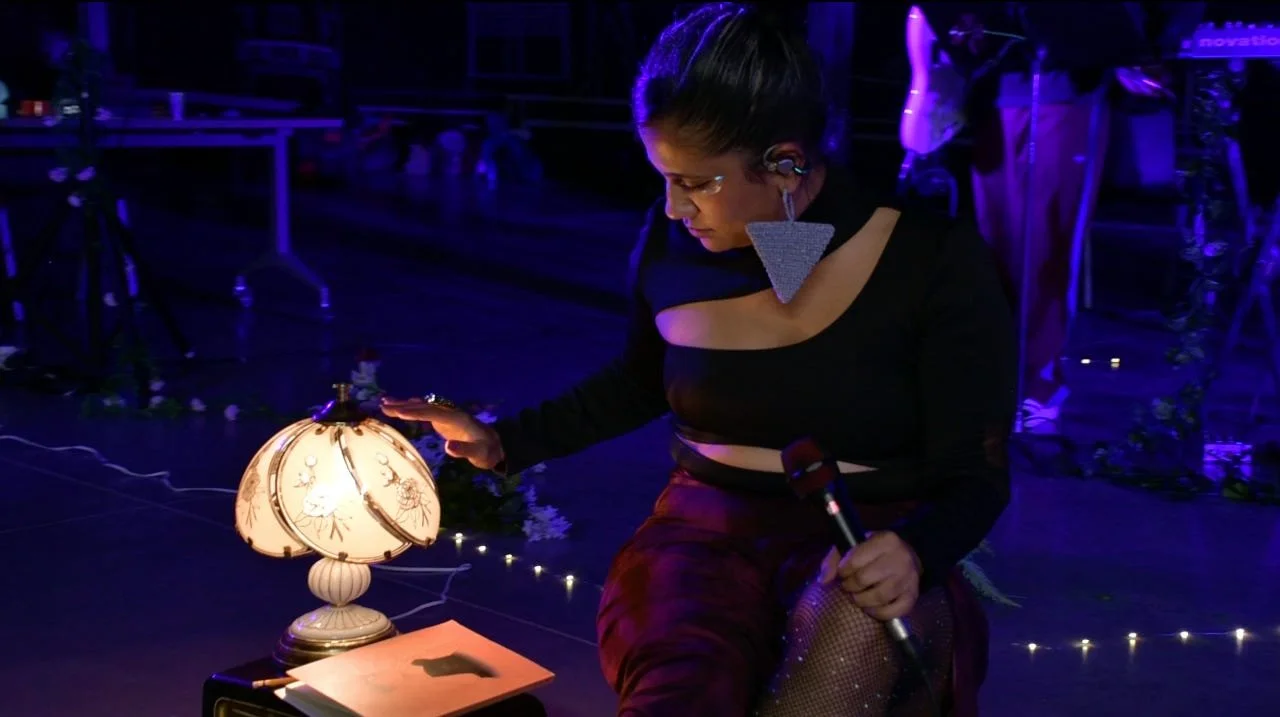
photo: Ila Bluem
The Awakening of Tradition and Unconscious Activism
I understand that the social context wasn’t your main driving force at first. What was the process of opening yourself to local music like? Was it because of the people around you, or did you feel that it was part of a generational movement among Colombian musicians?
Even before the conservatory, my sister was a key influence. She is a musician and has an extensive discography centred on traditional music. I grew up watching and listening to her, naturally inhabiting that environment. At school, too, I began learning about these kinds of music and became aware of the monumental body of work that existed within that world.
At first, seeing groups playing traditional music in the city was not part of my everyday reality because of the rigidity of my institutional education, but the seed was already there. Early in my undergraduate studies, I began exploring music from the Pacific region specifically, mixing it with fusion and popular music [the conservatory the same institution where she studied piano as a child and where later studied composition as an undergraduate - ed.].
So were those groups the point at which activism became integrated into your work - as a way of confronting reality and creating spaces for alternative narratives?
Today, I understand it that way, but at the time I didn’t see it as “activism” or as a consciously oppositional position. It was more of a vital necessity: I needed another space, another way of doing things. I wasn’t conscious that my search was responding to a tension with colonialism or similar structures. It was something more instinctive. Today I recognise that background, and I work with the clear intention that the use of traditional music can be a form of activism. But back then, honestly, it was simply a personal search for identity.
Do you remember the exact moment when you realised you needed that change? Was there a particular experience, in life or in music, that made you think: “This is what I’ve been missing”?
I vividly remember the impact of hearing the marimba de chonta for the first time. It is a fundamental instrument of the Pacific, and I was completely captivated by its sound. At that time, I was orbiting between two worlds: the rigidity of the conservatory and those “other,” alternative spaces. When I returned to the conservatory after being immersed in traditional music, I experienced an internal cultural clash. I would think, “Wow, this is something else.”
I missed the freedom of popular music when I was at the conservatory, but at the same time, the conservatory gave me tools that I also valued. It wasn’t a sudden conclusion, but a process that developed through my compositional practice. I began to understand that my musical style was born precisely from that mixture of influences. I realised that I was the sum of all those things, and that it was vital to my identity for both worlds to coexist in my work.
That duality is interesting. Today, traditional music sometimes plays a very important role as an element of identity for contemporary artists. If we compare the Colombian musical landscape from when you were starting out with the way it looks now, how do you see that evolution?
Today, the landscape is much more formalised. University programmes now have areas specifically dedicated to traditional musics, although conservatories, by definition, remain very conservative spaces. When I was starting out, the movement in Bogotá was fascinating. Fundamental groups such as Curupira emerged, for example. They came from private universities but dedicated themselves to conducting in-depth research in different regions. They were researchers and musicians at the same time, mixing jazz with sounds from the Colombian Caribbean.
That was the first generation in Bogotá to explore these fusions seriously. I was still a child when they were already adults consolidating that path, but when I encountered them later, as an adult, I identified deeply with what they were doing. The 1990s were difficult years, but they were decisive for what we see today. At first, groups of this kind were rare. Today they are much more common, very well received, and even extremely attractive to the international market - which is what tends to happen to everything that was once marginalised: capitalism eventually co-opts it.
Neighbourhood Rock, Vallenato, and the Shadow of Violence
The 1990s and 2000s were the epicentre of the infamous social phenomenon that has continued to grow. Looking back, what was happening musically at that time? What bands or sounds shaped the environment?
In the 1990s I was still a child, but the memories I have are closely connected to my home. I come from a low-income family and grew up in Bosa, a working-class neighbourhood in Bogotá. In that context, Colombian rock was fundamental. My brothers listened to it constantly, and it was the music that defined young people in neighbourhoods like ours at the time.
There was also salsa, which came through the North American and Caribbean market and was very important in my home and for people in the capital more generally. Then there was vallenato, the traditional accordion-based rhythm that became popular throughout the country. And, of course, there was the commercial music of figures such as Carlos Vives and Shakira, which, although produced here, was already completely connected to the dynamics of the US music industry.
Cartographies of Violence
It’s impossible not to think about the social problems of those years. Speaking about “narco-culture,” do you think genres such as vallenato, or the ways musicians talked about life, were influenced by drug trafficking and the social crisis?
Drug trafficking reached one of its highest levels of power during the 1980s and early 1990s, when I had not yet been born. Honestly, I don’t remember that context with enough awareness, much less what was happening with music and artists at the time.
However, I’m grateful for this question because it led me to research the subject more deeply in order to understand my own context better. I think that before speaking about so-called “narco-culture,” it is important to understand that Colombia was already experiencing multiple social and political problems long before the rise of drug trafficking. One of them was political violence, which preceded the strengthening of the drug trade by several decades and eventually became intertwined with it.
By the middle of the 20th century, the armed conflict had intensified due to different factors, including the political exclusion of certain sectors, the absence of the State in different regions, and profound social inequalities. For many years, the Liberal and Conservative parties concentrated political power, leaving large sectors of the population without representation. That exclusion, together with other social conditions, contributed to the emergence of different guerrilla groups.
My father lived through that period of violence, when belonging - or even being accused of belonging - to one side or the other could cost you your life. Over the years, that violence became intertwined with drug trafficking, which not only financed and intensified the armed conflict, but also profoundly transformed Colombia’s image in the eyes of the world.
To understand the phenomenon of drug trafficking in Colombia, I think it is first necessary to understand that the country has historically been shaped by different forms of political violence. There was a period dominated by the Liberal and Conservative parties that was even given the name La Violencia. My father experienced that reality firsthand; he saw people being killed simply for being Liberals.
That violence had multiple causes, including political exclusion, inequality, and a historical lack of representation for different sectors of the population. That context contributed to the emergence of guerrilla groups such as the FARC and the ELN. Years later, paramilitary groups also emerged. Initially, they presented themselves as self-defence organisations against the guerrillas, but they eventually became illegal armed actors closely linked to drug trafficking. Although several of these movements emerged with political or ideological discourses, over time many became involved in kidnappings, extortion, and other illegal economies.
At the same time, during the 1970s and 1980s, the major drug cartels grew, and Colombia became the world’s leading producer of cocaine. The Medellín and Cali cartels profoundly marked the country’s history, even though they no longer exist today in the form they did then. However, I think it is important to emphasise that this phenomenon did not emerge in isolation. It was also driven by the enormous international demand for cocaine, particularly from consumer countries, and by conditions of poverty that led many peasants to cultivate coca as one of the few economic alternatives available to them.
I was born in 1995, so I was very young during those years, but I remember my parents constantly talking about the fear caused by bombs in the cities - a form of violence that had previously seemed concentrated in rural areas. Drug trafficking eventually permeated many areas of national life, including politics. We should not forget that Pablo Escobar even held office as an alternate member of the Chamber of Representatives.
With the dismantling of the major cartels and, decades later, following the 2016 peace agreement, the landscape changed again. Although the FARC laid down their arms in order to enter civilian life, dissident groups emerged, and numerous armed organisations remained. Today, they fight not only over drug-trafficking routes, but also for control over natural resources and illegal economies such as mining, continuing to cause forced displacement and affecting many communities.
As I tell you all this, I’m struck by recognising how, again and again, political and ideological differences in Colombia have ended up being resolved through violence rather than dialogue. Added to this are inequality and State abandonment in many regions, conditions that facilitated the expansion of different illegal economies, including drug trafficking. Although the country has changed, and violence is no longer experienced in exactly the same way as it was in my father’s time, its consequences remain. My father, for example, still becomes afraid when one of us talks about politics in a public space.
All of that context undoubtedly influenced the cultural expressions of the period, including music. I couldn’t say precisely to what extent genres such as vallenato, or the ways certain artists narrated life, were shaped by that phenomenon, because I’m not a historian and I haven’t specifically researched the cultural history of that period. What I do believe is that it is very difficult to separate artistic production from such a complex and violent social context. Understanding that landscape is fundamental if we want to approach a conversation like this one.
It is great this conversation came up because I don’t think drug trafficking can become a humorous or simplistic way of talking about Colombian history - something I have heard on several occasions from foreigners. Behind that phenomenon lies a profoundly complex and painful history that has marked entire generations.
The Phenomenon of Colombian Popular Music
How does the musical community, particularly within conservatory, respond to an environment shaped by classism, racism, and violence?
That is precisely where a fundamental aesthetic layer emerges. Within the place where I trained, a need began to develop to approach traditional musics as a direct response to the colonialism, classism, and systemic racism in which we are immersed. For decades, peasant, Indigenous, and Afro-Colombian communities were not recognised. In fact, it was only around thirty years ago that laws emerged that truly recognised the Afro-Colombian population as an integral part of Colombia.
In Bogotá, a movement emerged that some people called New Colombian Musics. There was an explosion of bands that began fusing traditional music with other genres such as jazz and other forms of popular music. For us, this was not simply a formal exercise or an aesthetic whim. It was an act of reclamation and a response to the historical dispossession these traditions had suffered as a consequence of classism.
You’re speaking specifically about Bogotá. How was this process experienced in other cities such as Medellín or Cali?
I don’t know in depth what happened in other regions, but I do have some understanding of it. Medellín, for example, after suffering so profoundly from the stigma of the cartels, today has a very strong focus on social work in certain sectors. From both a social and sonic perspective, there has been enormous growth in the scene around traditional music from the Colombian Caribbean, particularly the bailes cantaos that come from Urabá in Antioquia. Many of these songs speak about the conflict experienced by communities in that region.
There is also a major singer-songwriter and rap movement. And in terms of aesthetic exploration, there are bands such as Puerto Candelaria, who fused jazz with tropical music. Of course, we also cannot ignore the enormous music industry that has become a global monster: reggaeton. And when we speak about narco-culture, reggaeton does sometimes reproduce certain values associated with it.
Cali, on the other hand, is a different case because it is the gateway to the Pacific. A large part of the population there is Afro-descendant, and traditional music is the norm - it is what people breathe. In recent years, there has been a massive and continuously growing movement of traditional Pacific music groups, partly thanks to a festival called Petronio Álvarez, one of the largest Afro-cultural festivals in Latin America.
Bogotá, however, has a particular characteristic. On the one hand, enormous numbers of migrants arrive in this part of the country. Yet within academia and the middle and upper classes - which generally belong to whiter sectors of the population - there has historically been considerable marginalisation and racism. And this is not limited to the capital; it is present more generally throughout the Andean region, in the interior of the country.
Bogotá has always been perceived as a more conservative and academic city. Perhaps precisely because of that rigidity, the need to experiment and explore was felt more intensely here. Bogotá gave itself permission to hybridise, to search through its roots in order to break with the institutional. My own experience comes from that Bogotá asphalt, desperately trying to reconnect with its heritage in order to understand its present.
Returning to traditional music in the 1990s, did it emerge as a response through lyrics - speaking directly about war or drug trafficking - or was it more a process of identity, in which folk traditions began to be regarded as a source of national pride in the cities?
It is difficult to say exactly how all musicians of the 1990s were affected, because the landscape was highly fragmented along social lines. On the one hand, vallenato was an enormously important genre that sometimes projected conservative and even machista values. On the other, for academic musicians, traditional music was a territory of discovery, something that formal institutions had often prohibited or looked down upon.
The commercial sector has always been so powerful in Colombia that it tends to “swallow” the alternative, or anything that searches within tradition for a purer form of representation. In the 1990s, reggaeton was only beginning to appear from Puerto Rico and the Caribbean. It was nothing like today, when after twenty years we have a massive local movement. What is clear is that the emergence of traditional figures during that period was partly a response to institutional prohibition - a need to make visible what academia had chosen to ignore.
There is a perception of the 1990s as an extremely difficult period in which some artists may have glorified drug trafficking while others denounced it. Do you remember specific examples of that glorification?
It is delicate territory, and I don’t want to make unfounded claims, but I know that some artists were hired at the time by major figures in the drug trade and performed at their events. I don’t want to suggest that this meant those artists necessarily shared the values represented by those gatherings, but I know that musicians from vallenato, música popular, ranchera, and tropical music were invited to perform at those parties. What I do remember is that rock bands such as Aterciopelados positioned themselves radically against narco-culture, even criticising the aesthetics surrounding women within that context and the forms of power it promoted.
What I find more intriguing - and dangerous, however - is what is happening in the present. Today, drug trafficking has transformed its symbolism. We are witnessing the rise of corridos tumbados, a genre coming from Mexico, where trafficking has reached a level of exacerbation similar to what we experienced thirty years ago. It is very striking to see Colombian artists adopting an aesthetic that glorifies money, power, and the objectification of women. It is a phenomenon that resonates strongly among Colombia’s lower and middle classes.
In the case of Mexico, I learned through an ARTE.tv documentary that cartels finance artists who seek to represent their values through music. The fact that this phenomenon resonates so strongly in Colombia raises many questions for me, and I am very interested in understanding the possible reasons behind it.
I kept thinking about what you mentioned earlier - whether simply making traditional music could itself represent a danger in Colombia. Although I gave you a general answer before, a particular case comes to mind now: a social leader called Bullen Rap, from the Atlantic coast. He led a cultural process in his municipality, in an area profoundly affected by the conflict and by the arrival of paramilitarism. There was an internal social fracture in that place: older people viewed young people with suspicion, almost automatically associating them with armed groups.
This leader developed a methodology in which he brought together the traditional music of the region, called bullerengue, with rap, creating bridges between generations. However, after years of community work, he was threatened and eventually forced into exile from his own territory.
His case illustrates something crucial: in Colombia, persecution does not always happen at a national or State level, as it did under the dictatorships of Chile or Argentina. Instead, it often takes place through specific forms of territorial control. There are places where performing traditional music has effectively been (or continues to be) prohibited because armed groups, whether guerrillas or paramilitaries, exercise total control over people’s everyday lives.
In these regions, where control over land and forced displacement are commonplace, traditional music becomes an act of resistance that violent actors attempt to suppress. They want to maintain the strictest possible control over the population, and community art breaks that structure. It is a paradoxical reality: while traditional music is celebrated and validated at festivals in the city, in certain rural areas of the country, playing a drum or singing bullerengue can still mean a sentence of death or exile.
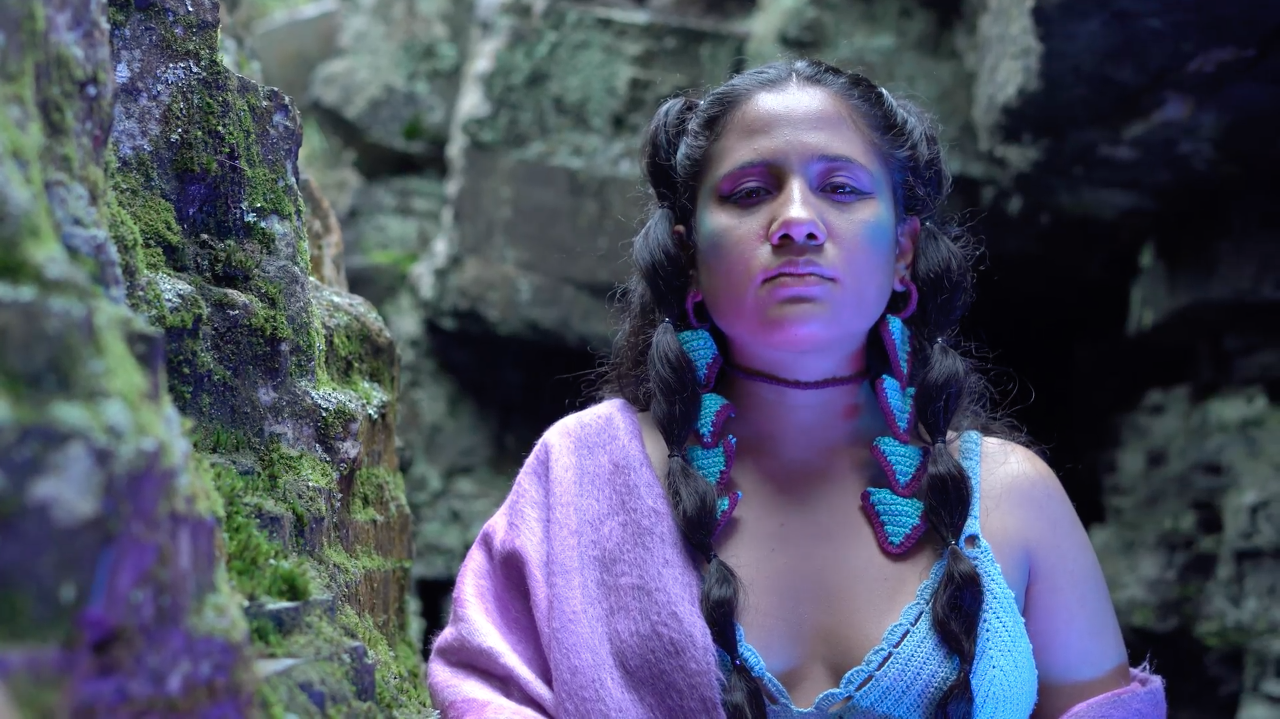
photo: Celia Hurtado
This brings me to the question of how societies react to violence. I come from a post-Soviet context, and both in the whole Soviet Union and in Ukraine, we became accustomed to not saying very much, to hiding our heritage because it could be dangerous. Ukrainian culture was persecuted, and many activists were killed for holding pro-independence views. As a post-colonial and post-narco-colonial country, do you feel Colombia shares that same mentality - a fear of openly expressing your heritage or your views?
It is a very powerful comparison. In Colombia, rather than a total State prohibition, what we have experienced is widespread rejection and symbolic violence. For years, there were profoundly racist attitudes towards traditional music; Afro-Colombian people were not even regarded as fully human. It was an aesthetic and social rejection that lasted for decades.
However, if we speak about direct violence against musicians because of their political expression, we have not reached the level experienced under the dictatorships of the Southern Cone. In Chile, Argentina, or Brazil, musicians were killed or forced into exile on a massive scale for denouncing what was happening. In Colombia, we have not experienced that same mass exile of artists, but death threats certainly exist. One recent example is Adriana Lucía, who in 2020 received direct threats against herself and her family for speaking out during the social unrest taking place at the time.
Where violence becomes lethal is in the territories. In the “red zones” of the Colombian Pacific, the conflict remains intense because of criminal groups and dissident organisations. There, we have the cultores: musicians and artists who work with children so that they do not enter the war. That is what is truly dangerous today: taking people away from the war through art. Many of those cultural leaders have indeed been killed.
In the city, a musician with a critical discourse may be relatively safe. But in these territories of conflict, art as resistance carries a very real cost in human lives.
After everything we’ve discussed - the ethical responsibility of working with other communities, the political potential of traditional music, but also the very real risks carried by cultural work in some territories - what does responsibility mean for La Malsonante going forward? How do you want the project to exist beyond the music itself?
LA MALSONANTE is currently seeking to build a model of social sustainability that can contribute to the communities whose stories the project narrates. The intention is that, through concerts, merchandise, and other mechanisms, the project can generate forms of support that make a structural contribution to these communities. In order to develop Nativa, I had to research very deeply and speak with people who had lived through very specific experiences.
And musically, where does that take you next?
Over the past few years I have been developing a new musical production that emerged from my master’s research-creation project. This production focuses on the juga, a traditional marimba and vocal rhythm from Colombia’s southern Pacific region. The album proposes to narrate the routes travelled by the marimba, from Afro-Colombian communities in the southern Pacific to the city of Bogotá. These stories are connected to colonial, racial, religious, and commercial issues.
I am interested in developing this project because, in recent years, these musics have experienced significant growth in Bogotá. However, that interest is often not accompanied by reflection on the historical problems experienced by the communities that created them. That is why I want to tell these stories through an ethical approach to research and musical creation. In addition, several of the songs will be developed in collaboration with people who belong to these communities.